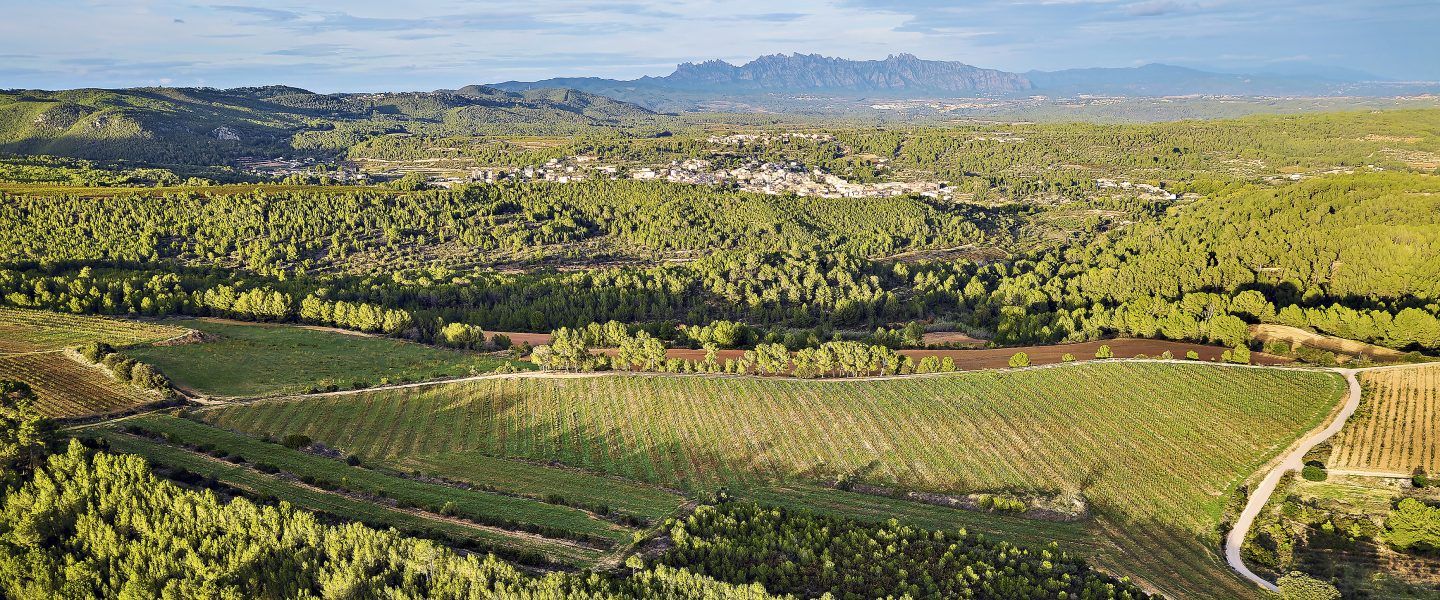
MERCAVI is a project coordinated by INNOVI, aimed at assessing the potential of the carbon market in vineyards in Catalonia. The project includes MASIES D’AVINYÓ, S.L. as leader, Recaredo and Celler el Miracle as beneficiaries, as well as the Balmes University Foundation – University of Vic – Central University of Catalonia – BETA and the Catalan Institute of Vine and Wine (INCAVI) as technological partners.
The main objective of the MERCAVI project is to generate as much knowledge as possible through model farms in agricultural landscapes to promote the standardisation of methodologies for the Climate Credit System in Catalonia’s wine sector. Focusing on the regeneration of agricultural soils, it seeks to mitigate the effects of climate change while encouraging sustainable and economically viable practices for winegrowers.
Through model farms, the project will analyse regenerative agriculture strategies that enhance carbon sequestration, improve soil health, and increase vineyard resilience. Priority is given to knowledge transfer to farmers and companies to ensure the adoption of these innovative practices.
Thanks to this approach, the MERCAVI project promotes sustainability and economic development in the sector, positioning Catalonia as a leader in carbon farming and climate credit markets.
The secondary objectives of the project are:
- To assess, through model farms, different agricultural practices focused on soil regeneration and increased carbon capture in vineyard soils.
- To agronomically evaluate the implemented agricultural strategies to determine their impact on soil health, crop productivity and system resilience.
- To determine the potential of regenerative strategies to promote carbon farming and carbon markets in the Catalan wine sector.
- To foster a holistic knowledge transfer that connects the agricultural sector, businesses, and society.
Project co-funded by the European Union through intervention 7161 of the CAP Strategic Plan (PEPAC) 2023–2027.
