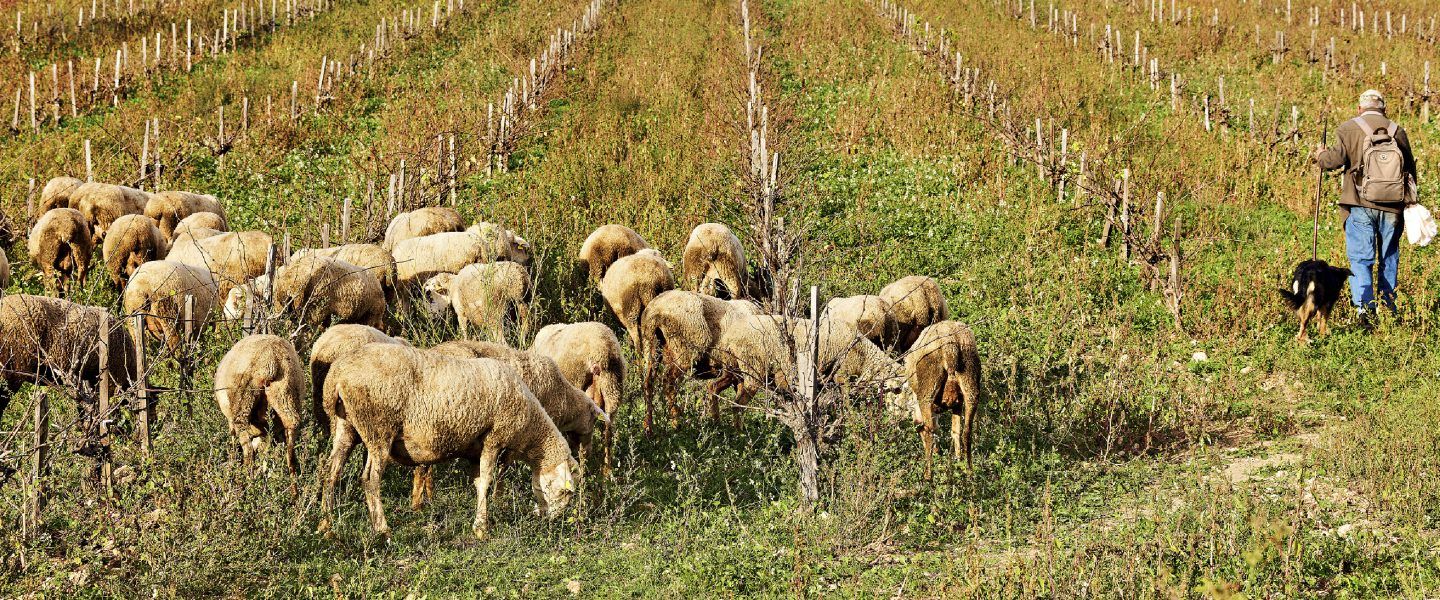
The VITI-RAM project was created with the aim of integrating viticulture and extensive livestock farming to improve biodiversity management, reduce costs, and promote sustainability in the agricultural sector. Through the presence of flocks in the vineyards, natural fertilization of the soil is promoted and mechanization is reduced, generating benefits for both winegrowers and livestock farmers.
Challenges of the sector
Climate change is increasingly creating difficulties for the agricultural sector. Among the main challenges are droughts, weed growth in vineyards, high maintenance and mechanization costs, the risk of wildfires in forest areas, and the rising cost of fertilizers and fuel for soil management.
A sustainable solution
VITI-RAM promotes the integration of extensive livestock farming as a response to these challenges. This synergy allows for:
- Reducing mechanization and the use of chemical fertilizers in vineyards.
- Naturally fertilizing the soil and improving biodiversity.
- Efficiently controlling vegetation and preventing forest fires.
- Providing shepherds with new grazing areas, reducing feeding and transport costs.
- Improving forage quality and supporting the sheep sector.
How will it be carried out?
To validate this model, the project includes two pilot areas:
Recaredo (Penedès) and La Gravera (Costers del Segre), where controlled grazing trials will be conducted in organic vineyards and forested areas.
A detailed analysis will be carried out on the agronomic, environmental, and economic impact of this practice.
The objective of VITI-RAM is to establish effective collaboration between winegrowers, winemakers, and shepherds to build a more sustainable future in our vineyards. A step forward toward a more balanced and environmentally respectful agricultural management.
Project co-financed by the European Union through intervention 7161 of the CAP Strategic Plan (PEPAC) 2023–2027.
