Project formed by INNOVI, acting as group coordinator. Recaredo as leader, Gramona and ADF Garraf Penedès as consortium members, Forest Science and Technology Centre of Catalonia (CTFC) and the Institute for Research in Nutrition and Food Safety – University of Barcelona (INSA-UB) as technology centres.
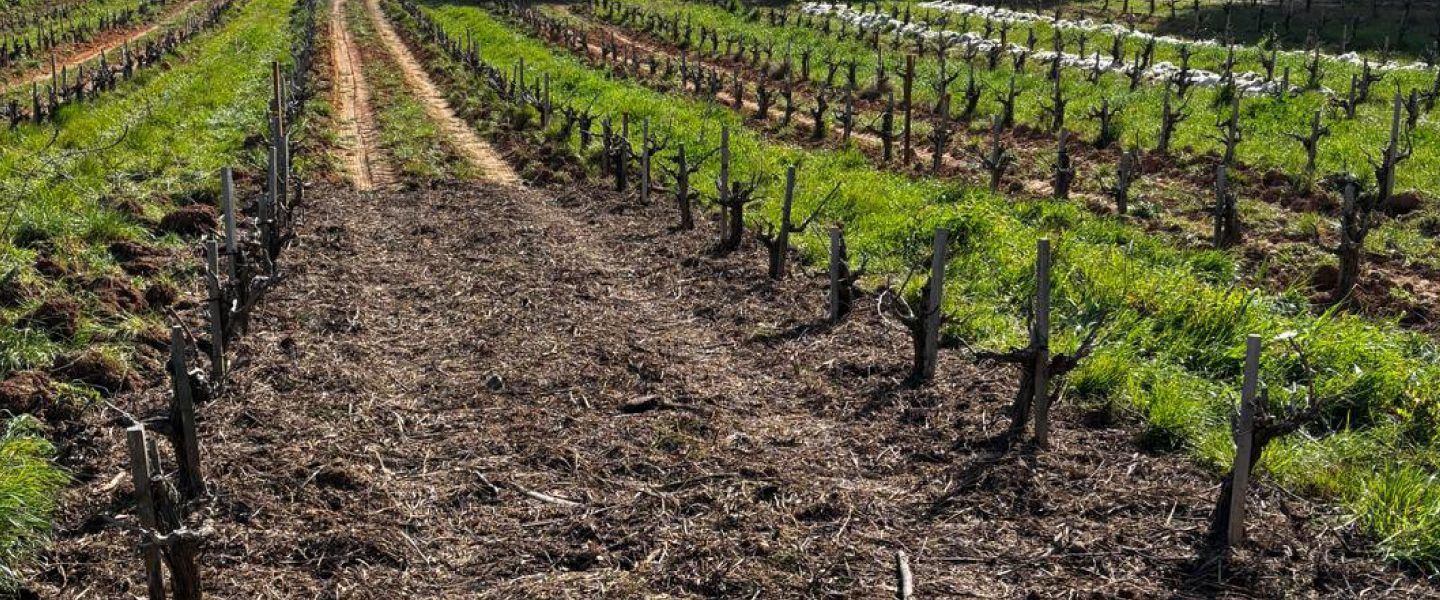
The project investigates the adaptation of vineyards to climate change through regenerative agronomic strategies and promotes the use of mulching with woody plant matter to improve water retention, fertility, and soil health. This initiative takes advantage of forest residues and local plant materials to revitalize vineyard soils, reduce erosion, and minimize the impact of drought. The project is supported by the European Union through the Strategic Plan of the CAP 2023-2027.
The vineyards of the Penedès are in a vulnerable position with respect to climate change. In fact, due to the drought of recent years, the condition of the vines is delicate, with vigour problems associated with plant stress, largely caused by water shortage and high summer temperatures. This situation has implications for the harvests and may even affect the quality of the grapes.
To be able to adapt vineyards to droughts and torrential rain episodes expected in the context of climate change, the use of woody plant materials could be a strategy for regenerating soils that are poor in organic matter and improving their physical and biological state. We know that mulching provides several advantages in different aspects of management, including improved water availability, soil protection against erosion, and reduced competition from weed plants. Recently, there is also discussion about how maintaining mulching combined with no-tillage brings additional benefits related to soil fertility.
Now, with this initiative, the intention is to extract this shredded plant material from the forest—resulting from forest management to prevent or reduce the intensity of wildfires—and apply it to the vineyard crop with the intention of giving life to these agricultural soils, fertilising them, and retaining soil moisture to face the challenge of drought. In addition to woody plant residues (WPR) from forests—mainly from white pine groves—there are also WPR available from other broadleaf species commonly found in the gardens of towns in the region. The main objective is to adapt the methodology for regenerating vineyard soils using various local woody materials to the conditions of high-quality grape production in the Penedès.
Project co-funded by the European Union through intervention 7161 of the CAP Strategic Plan (PEPAC) 2023-2027.
