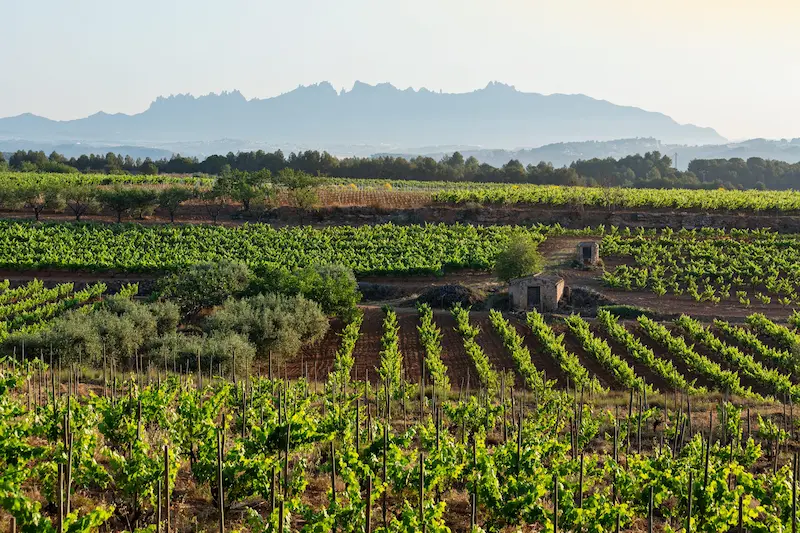
At Recaredo, we are a family of winegrowers and producers of terroir-driven Corpinnats—sparkling wines that seek to express, as purely as possible, the place where they are born, with an unequivocal bond to the soil, the estate and the individual plot. We craft our wines with the aim of conveying the complexity that only very long—often extreme—ageing on lees can provide, always carried out under natural cork and completed with manual disgorgement. The grapes used to make our Corpinnats come 100% from our own vineyards, located within the Corpinnat territory and cultivated according to the principles of organic and biodynamic agriculture.
What is the traditional method in Corpinnat sparkling wines?
The Corpinnat territory is the cradle of great sparkling wines in the historic winegrowing region of Penedès, south of Barcelona, where, at the end of the 19th century, sparkling wine production using the traditional method first began.
The traditional method is the system used to produce the world’s finest quality sparkling wines and is defined by a second fermentation that takes place in the bottle. After producing a base wine, it is bottled with yeasts and sugar to trigger a second fermentation that creates the natural carbon dioxide. The wine then rests for long periods on its lees, refining and gaining complexity, texture and aromatic depth.
Finally, through riddling and disgorgement, the sediments are removed before the final closure. At Recaredo, these processes are carried out manually for 100% of our Corpinnats and are understood as an expression of respect for time, the vineyard and the wine’s authenticity.
Biodynamic viticulture and hand harvesting
For us, a great wine is always a faithful reflection of the land that gave birth to it. This is why at Recaredo we practise dry farming based on the principles of biodynamics, cultivating our vineyards without herbicides or insecticides and using exclusively elements of natural origin.
Biodynamic agriculture prioritises ecosystem balance and vineyard biodiversity, understanding the vineyard as a living organism. From this essentially biological perspective, biodynamics allows us to produce deeply expressive sparkling wines, with great ageing potential and, above all, respectful of the landscape from which they originate.
Recaredo was the first producer in the Penedès winegrowing region to obtain the international Demeter biodynamic viticulture certification.
In addition, to guarantee the highest grape quality, we carry out 100% of the harvest by hand, ensuring rigorous and careful selection of the grapes directly in the vineyard.
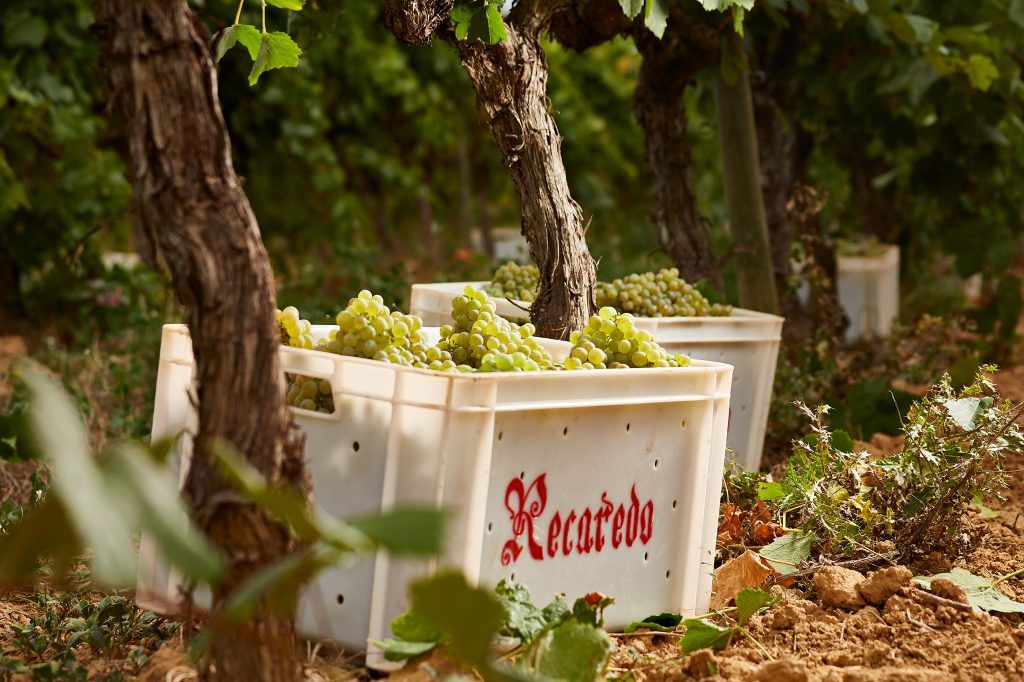
Base wines of maximum purity: precise vinification to capture the essence of the landscape
At Recaredo, we craft our base wines with meticulous attention, fully aware that they are the soul of our Corpinnats. We seek the purest expression of the grape, the vineyard and the landscape that gives them life. For this reason, we adapt vinification to the singularities of each wine, with deep respect for its character and personality.
We work with 600-litre Austrian and German oak barrels, as well as large-format vats of 2,500 litres, always with very light toasting to preserve freshness, tension and varietal authenticity. In this way, our base wines are not merely a preliminary stage, but a true declaration of commitment to identity, origin and excellence.
Blending
Blending at Recaredo is an exercise in precision and profound knowledge of the vineyard. To honestly express the landscape from which our wines are born, we know the destiny of each vineyard from the outset: during pressing, musts are never blended. Only in this way can we decide, once base wine fermentation is complete, on the assemblage that will give rise to wines such as Recaredo Terrers or Recaredo Intens Rosat, conceived as a balanced mosaic of our own vineyards.
We also produce single-estate wines that express one unique place, such as Recaredo Serral del Vell and Recaredo Subtil. For the Corpinnat Recaredo Reserva Particular, we select old vineyards owned by the family. The ultimate expression of this philosophy is Corpinnat Turó d’en Mota de Recaredo, made from a single vineyard of almost one hectare, planted over 85 years ago, and a true reflection of its origin.
Tirage or bottling: The beginning of the second fermentation in bottle
The next step in the traditional method is tirage, the moment when the base wine is bottled to begin the second fermentation. At Recaredo, since the 2017 vintage, this fermentation has been carried out exclusively using must from our own vineyards or organic rectified concentrated grape must, replacing cane sugar.
This decision reinforces our philosophy of producing 100% terroir-driven wines, in which even the element that triggers the second fermentation comes from the grape and the landscape where our Corpinnats are born.
The importance of natural cork during ageing
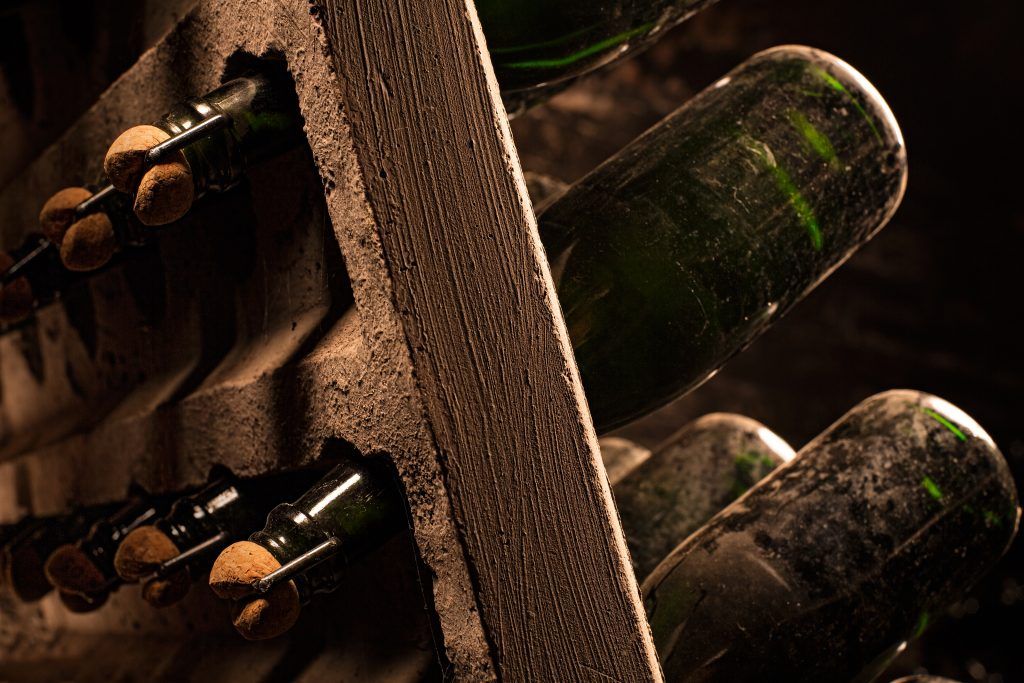
At Recaredo, we work 100% with natural cork for the ageing of all our Corpinnats, making us one of the very few producers in the world to maintain this qualitative and environmental commitment from the first to the last bottle. Technically, cork is an ideal ally for long ageing, as it protects the wine from oxidation and allows for slower evolution, encouraging gradual and prolonged refinement.
From a sustainability standpoint, cork comes from a regenerative industry, as its production uses far less energy and generates fewer residues. Moreover, it does not emit gases into the atmosphere during production but rather absorbs them, and it allows for a circular economy through the recycling of all temporary corks.
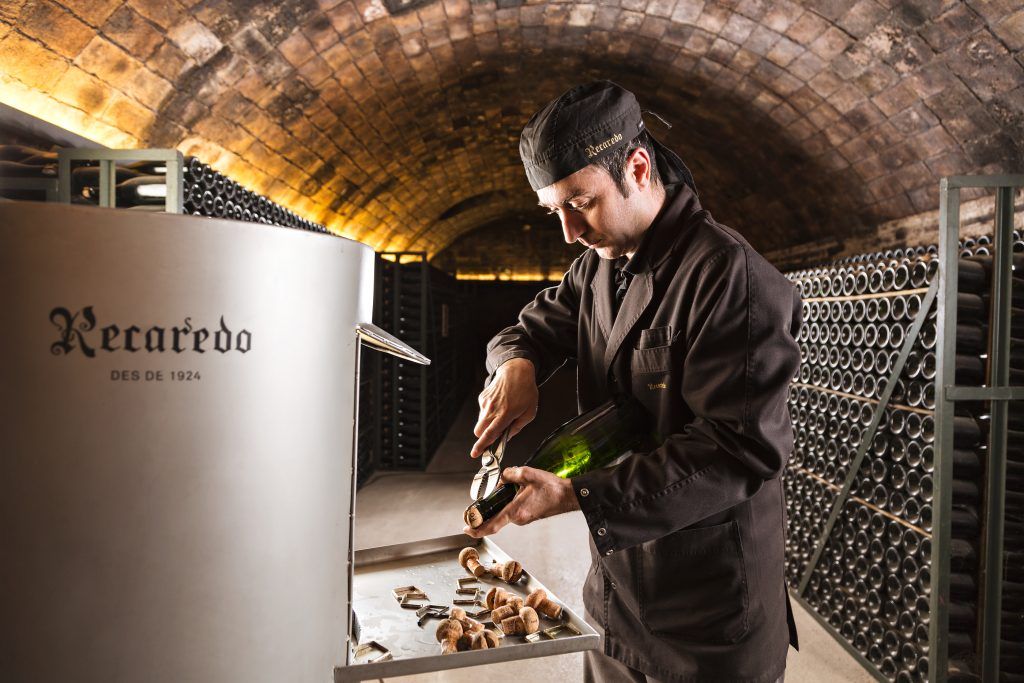
This choice is also a firm commitment to preserving an artisanal craft: that of the disgorgement master. Ageing under cork requires all bottles to be disgorged manually once ageing is complete—a precise and patient task that forms an essential part of our understanding of the craft and our respect for traditional processes.
The value of time: long ageing on the lees
Time is an essential ingredient in the making of Recaredo Corpinnats. Ageing lasts a minimum of 30 months, reaching more than 25 years on lees for our most singular wines. During this long rest, the sparkling wine refines, gains complexity and depth, becoming a true chronicle of the Mediterranean climate, calcareous soils and an honest relationship between human beings and nature.
Manual disgorgement at cellar temperature, without freezing the neck
Disgorgement is a true craft. At Recaredo, all bottles are disgorged by hand and at the natural temperature of the cellars, without freezing the neck. This practice, reserved for expert hands, allows us to carry out a final quality control while keeping alive a craft and the legacy of Josep Mata Capellades, founder of Recaredo, who began in 1924 as an apprentice master of disgorgement and riddling.
A historic commitment to Brut Nature Corpinnats
All Recaredo Corpinnats are Brut Nature, with no addition of dosage. This decision reinforces process transparency and allows the wine to express itself without artifice, honestly revealing its origin, vintage and the imprint of time.
A unique commitment certified by Bureau Veritas
Since 2003, in an exercise of honesty and transparency, we have audited and certified all our processes with the independent agency Bureau Veritas. From vineyard to winery and ageing in the cellars, every stage is assessed and certified, reaffirming our vocation as winegrowers and producers and our commitment to the consumer.
The Bureau Veritas certification is the result of more than 100 years of evolution, effort and absolute dedication—what some leading professionals have called the Silent Revolution of RECAREDO. Ultimately, the value of our Corpinnats is the direct consequence of a way of working, of believing in the territory and of always offering the very best of our craft.
Frequently Asked Questions (FAQs) about Corpinnat production
Why does Recaredo carry out manual disgorgement at ambient temperature?
At Recaredo, we work 100% with natural cork stoppers for the ageing of all our Corpinnats. This choice is also a firm commitment to preserving a traditional craft: that of the disgorgement master. Ageing with a cork stopper requires every bottle to be disgorged manually once the ageing period has come to an end. It is a precise and patient task that forms an essential part of our way of understanding the craft and our respect for traditional processes.
Disgorgement is the final process before inserting the definitive cork stopper. Today, skilled professionals keep this craft alive at Recaredo—an expression of artisanal expertise and respect for the environment. Moreover, it allows us to apply a final quality check, as we can inspect each bottle individually and detect any potential defect in the Corpinnat.
What does it mean for a sparkling wine to be “Brut Nature”?
It means that no sugar is added after disgorgement. The wine is presented as it is, in its purest expression, a faithful reflection of the grape, the terroir and the ageing time.
Why is natural cork used during ageing on the lees?
Natural cork is a fundamental ally for long ageing, as it protects the wine from oxidation and allows for a slow, precise and balanced evolution, encouraging longer and more complex ageing processes. It is a material of natural and regenerative origin.
At Recaredo, the entire process is carried out exclusively with natural cork, from ageing to the final cork, without the wine coming into contact with any other material. This level of commitment places Recaredo among the few wineries that work 100% with cork, bottle by bottle.
Is biodynamic farming required for Corpinnat grapes?
Corpinnat regulations require the grapes to be organic. At Recaredo, we go one step further, working according to biodynamic principles, with the conviction that great wines cannot exist without a vineyard full of life.